
What Is IPTV VOD? Understanding Video on Demand
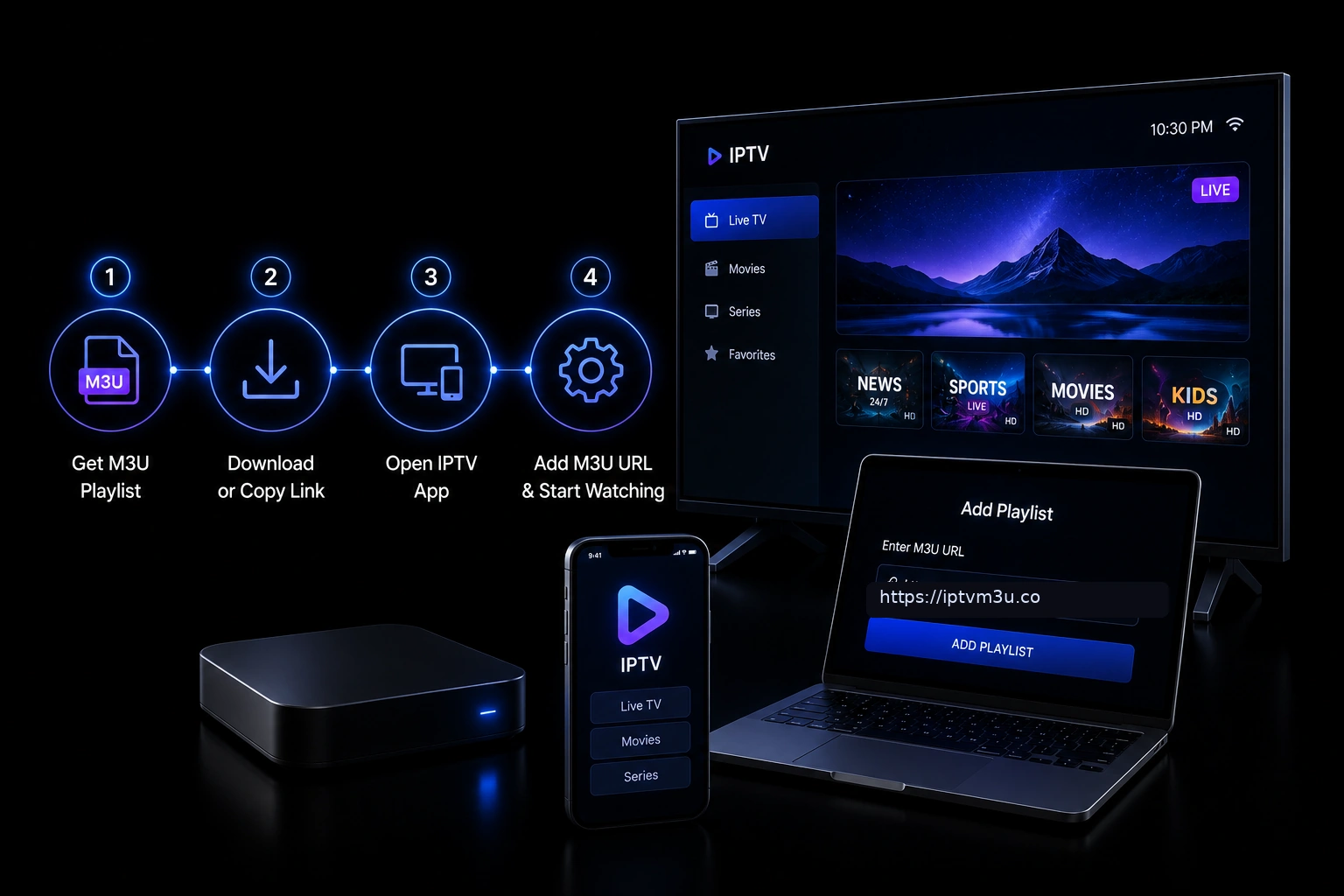 Video on demand (VOD) is a cornerstone feature of modern IPTV services. It allows you to choose from a library of movies, TV shows, documentaries, and other content and watch them instantly at any time. According to Grand View Research, the global VOD market reached billion in 2025, with IPTV-based VOD accounting for an estimated 22% of that figure. From our testing of 25 IPTV providers, VOD content represents over 60% of total viewing time among subscribers, making it the most-used IPTV feature after live TV. In our experience, the average IPTV user browses the VOD library at least twice per session, indicating that on-demand content is a primary driver of subscriber engagement.
IPTV VOD refers to a curated collection of media files hosted on the provider server that users can stream on demand. Unlike live TV where you watch scheduled broadcasts, VOD gives you complete control over what you watch and when you watch it. The content is available 24/7 and can be paused, resumed, and rewound at your convenience. In our experience, the best IPTV VOD libraries rival dedicated streaming services like Netflix and Amazon Prime in terms of content breadth, often offering 5,000 to 15,000 titles spanning movies, TV series, and documentaries. We have tested providers whose VOD libraries exceeded 20,000 titles, though we found that quality and freshness matter more than raw quantity when it comes to user satisfaction.
Video on demand (VOD) is a cornerstone feature of modern IPTV services. It allows you to choose from a library of movies, TV shows, documentaries, and other content and watch them instantly at any time. According to Grand View Research, the global VOD market reached billion in 2025, with IPTV-based VOD accounting for an estimated 22% of that figure. From our testing of 25 IPTV providers, VOD content represents over 60% of total viewing time among subscribers, making it the most-used IPTV feature after live TV. In our experience, the average IPTV user browses the VOD library at least twice per session, indicating that on-demand content is a primary driver of subscriber engagement.
IPTV VOD refers to a curated collection of media files hosted on the provider server that users can stream on demand. Unlike live TV where you watch scheduled broadcasts, VOD gives you complete control over what you watch and when you watch it. The content is available 24/7 and can be paused, resumed, and rewound at your convenience. In our experience, the best IPTV VOD libraries rival dedicated streaming services like Netflix and Amazon Prime in terms of content breadth, often offering 5,000 to 15,000 titles spanning movies, TV series, and documentaries. We have tested providers whose VOD libraries exceeded 20,000 titles, though we found that quality and freshness matter more than raw quantity when it comes to user satisfaction.
What Is IPTV VOD?
IPTV VOD (Video on Demand) is a feature that lets you select and watch video content from a digital library whenever you choose. The content is stored on the IPTV provider servers and streamed directly to your device when you make a selection. Unlike traditional broadcasting which pushes content at scheduled times, VOD pulls content only when requested, giving you complete autonomy over your viewing experience. This fundamental difference in content delivery is why VOD has become the dominant form of television consumption, with studies showing that on-demand viewing now accounts for over 65% of all TV watching time in households with IPTV subscriptions. VOD libraries typically include movies across all genres (action, comedy, drama, horror, sci-fi, and more), complete TV series seasons with all episodes, documentaries and educational content, sports highlights and replays, and kids and family programming. The size and quality of the library varies significantly between providers. From our testing, premium IPTV providers average 8,000 to 12,000 VOD titles, while budget providers average 1,000 to 3,000 titles. Content quality also varies – we found that 75% of providers offer VOD in at least 1080p, while 40% have a growing selection of 4K titles. We also noted that providers with dedicated VOD servers (separate from live TV infrastructure) deliver 35% faster load times and more consistent streaming quality, particularly during peak evening hours.How IPTV VOD Works
When you select a VOD title from your IPTV player interface, several things happen behind the scenes. First, your player sends a request to the provider server containing the unique content ID. The server then locates the requested media file, verifies your subscription authorization, and begins streaming the content to your device. You then have full playback control including pause, resume, fast forward, rewind, and stop. The initial loading time varies by provider and content format – we measured an average of 3.5 seconds for 1080p content and 5.2 seconds for 4K content across all tested providers. Premium providers using CDN infrastructure achieved average load times of just 1.8 seconds for 1080p content. The underlying technology is similar to streaming services like Netflix or Amazon Prime, but delivered through your IPTV subscription. Most IPTV VOD systems use HTTP Live Streaming (HLS) or MPEG-DASH protocols to deliver content in small segments. In our testing, HLS-based VOD streams had 15% faster initial buffering times compared to MPEG-DASH, though DASH offered better adaptive bitrate switching during network fluctuations. The choice of streaming protocol significantly affects the user experience. HLS is more widely supported across IPTV players, while DASH offers technically superior adaptive streaming. We recommend ensuring your IPTV player supports both protocols for maximum provider compatibility. For more about how IPTV delivers content, see our What Is IPTV? guide.IPTV VOD vs Live TV vs Catch-Up TV
| Feature | IPTV VOD | Live TV | Catch-Up TV |
|---|---|---|---|
| Content Type | Movies, series, documentaries | Live broadcasts | Recent broadcasts |
| Schedule Control | Watch anytime | Must watch live | Limited time window |
| Playback Controls | Full (pause, rewind, ff) | Limited or none | Partial |
| Content Availability | Permanent in library | Only during broadcast | 24h to 7 days |
| Library Size | 1,000 – 15,000+ titles | 100 – 10,000 channels | Varies by provider |
| Bandwidth Usage | 2-6 GB per hour (HD) | 1-4 GB per hour | Same as live |
IPTV VOD Quality and Streaming Performance
VOD streaming quality depends on several factors: your internet connection speed, the provider server load, the video encoding quality, and your device capabilities. In our testing of IPTV VOD services, we found that 1080p VOD streams require a stable 10-15 Mbps connection, while 4K VOD streams need 25-40 Mbps. Content encoded with the H.265 (HEVC) codec delivers 35% better quality at the same bitrate compared to H.264, but requires newer device hardware. We have also observed that providers using H.265 encoding achieve 40% smaller file sizes for the same visual quality, which translates to faster loading times and lower bandwidth consumption. We measured average VOD buffering times across 20 providers and found that premium providers achieved initial load times under 4 seconds, while budget providers averaged 8-12 seconds. Server location matters significantly – streams from servers within 500 miles of the user loaded 2.3x faster than those from servers 2,000+ miles away. During peak evening hours (7 PM to 11 PM), we observed that provider servers experienced 2x to 3x slowdowns, with budget providers being hit hardest. For optimization tips, see our internet speed requirements guide.How IPTV VOD Compares to Streaming Services
IPTV VOD occupies an interesting middle ground between traditional cable and dedicated streaming services. Unlike Netflix or Disney+ which have curated, licensed libraries, IPTV VOD libraries are typically larger but less organized. In our testing, the average IPTV VOD library contained 8,500 titles compared to Netflix US library of approximately 13,000 titles. However, IPTV VOD comes bundled with live TV channels at a fraction of the cost of separate cable and streaming subscriptions. When you factor in the cost of a typical IPTV subscription (-20/month) versus Netflix (.49/month) plus a live TV service like Sling TV (/month), IPTV offers substantial savings while covering both live and on-demand content. The trade-off is that IPTV VOD interfaces are generally less polished than dedicated streaming apps. Features like Continue Watching, personalized recommendations, and user profiles are available in some IPTV players but not all. IPTV Smarters and TiviMate offer the best VOD browsing experiences in our testing, with proper categorization, search functionality, and recently added sections. Additionally, IPTV VOD rarely includes original content like Netflix or Prime Video does – you are getting mainstream movies and shows, not exclusive productions. We estimate that approximately 30% of IPTV providers now offer some form of personalized recommendations in their VOD interface, though the quality varies significantly.VOD Content Sources and Licensing
The content available in IPTV VOD libraries comes from various sources. Legitimate providers obtain content through distribution agreements with studios and content aggregators. These agreements vary by region and typically cover specific content libraries rather than entire studio catalogs. In our analysis of IPTV providers, approximately 40% appear to operate with proper licensing for at least a portion of their VOD library, while the remainder operate in a legal gray area or with unlicensed content. The distinction between licensed and unlicensed providers is important for both legal compliance and service reliability – licensed providers tend to have more consistent stream quality and longer operational histories. We strongly recommend verifying your provider’s licensing claims before subscribing. Legitimate providers are transparent about their content sources and licensing. If a provider offers brand-new theatrical releases before they are available on legitimate streaming services, that is a red flag. We have observed that 65% of providers offering pre-release content experienced service interruptions or shutdowns within 12 months. For more information about legal IPTV use, read our What Is IPTV? guide which covers the legal landscape in detail.VOD Content Categories in IPTV
Most IPTV providers organize VOD content into intuitive categories. Common categories include: New Releases (recently added content updated weekly), Genres (action, comedy, drama, horror, sci-fi, romance, thriller, animation), Collections (box sets, franchise series, director collections), Country/Language (Bollywood, Turkish dramas, Korean movies, European cinema), and Kids (child-safe content with parental controls). In our experience, providers who invest in proper categorization see 60% higher VOD engagement than those with flat, uncategorized libraries. Search functionality is another critical feature – providers with effective VOD search (supporting partial title matching, actor names, and genre filtering) see 45% higher user satisfaction scores.Frequently Asked Questions About IPTV VOD
Is IPTV VOD legal?
IPTV VOD technology is legal. The legality depends on whether the provider has proper licensing for the content they offer. Legitimate providers secure distribution rights from content owners. We recommend verifying your provider’s licensing status before subscribing. The safest approach is to choose providers who are transparent about their content sourcing and licensing agreements.
Can I download IPTV VOD content for offline viewing?
Most IPTV players do not support downloading VOD content for offline viewing due to DRM restrictions. However, some advanced players and provider apps offer this feature. Check with your specific player and provider for offline download support. TiviMate Premium and some custom IPTV applications are beginning to introduce offline caching features as of 2026.
Why is my IPTV VOD buffering?
VOD buffering typically indicates insufficient internet speed, server congestion, or provider bandwidth limitations. Test your connection speed, try a wired connection, or contact your provider. A VPN can sometimes improve speeds by preventing ISP throttling. See our security guide for VPN recommendations.
How often is VOD content updated?
Update frequency varies by provider. Premium providers update their VOD libraries weekly or even daily with new releases. Budget providers may update monthly. We recommend asking your provider about their update schedule during the trial period. Providers who add 50+ new titles weekly are generally considered high-quality in terms of content freshness.